Respiration
How cells release energy from glucose through aerobic and anaerobic pathways
Releasing Energy
The process that powers every cell in your body
Aerobic Respiration
per glucose molecule
Requires oxygen
Anaerobic Respiration
per glucose molecule
No oxygen needed
Aerobic respiration produces 19x more energy than anaerobic respiration!
Reactants:
Glucose + Oxygen
Products:
Carbon dioxide + Water + ATP
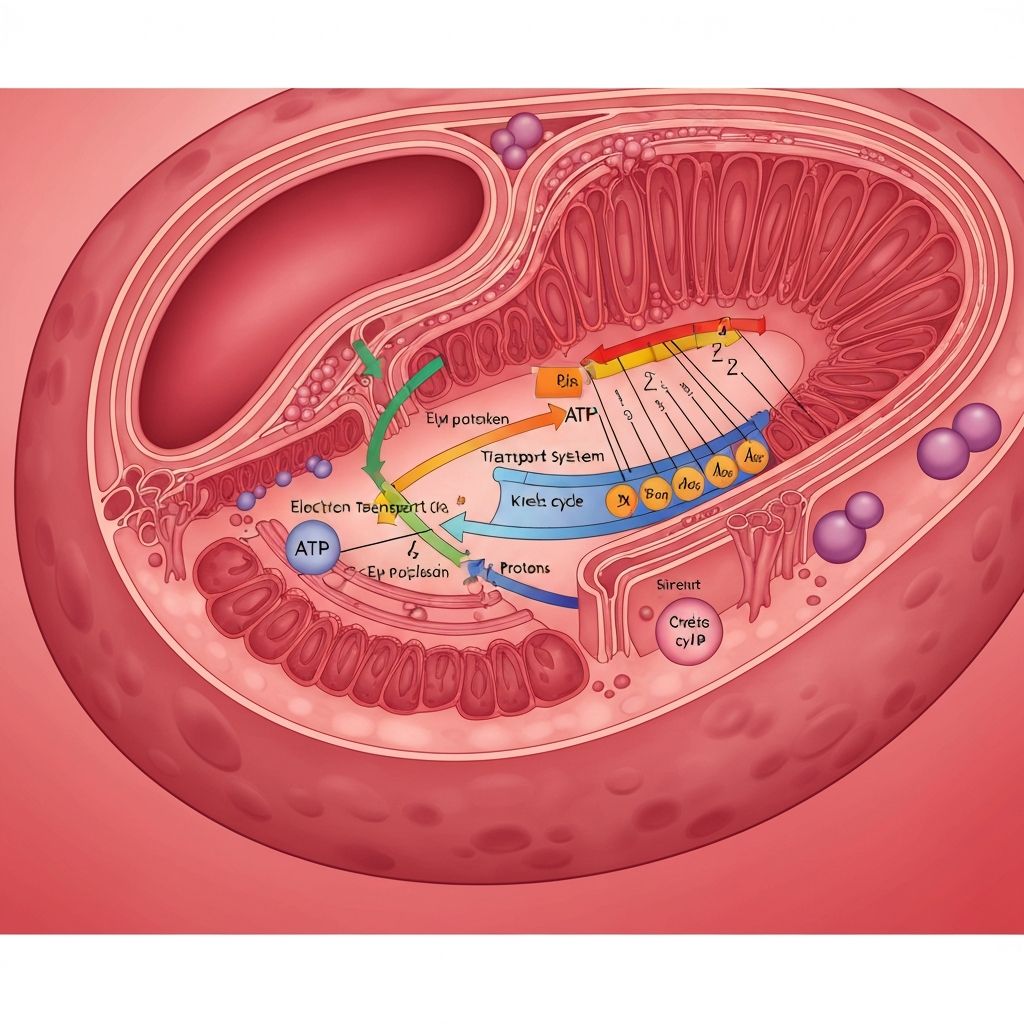
Aerobic respiration is the main way cells release energy from glucose. It requires oxygen and produces a large amount of ATP (about 38 molecules per glucose). This process occurs in two locations: glycolysis happens in the cytoplasm, while the Krebs cycle and electron transport chain occur in the mitochondria.
The Three Stages:
1. Glycolysis (Cytoplasm)
Glucose (6C) is broken down into two pyruvate molecules (3C each). This produces 2 ATP and doesn't need oxygen.
2. Krebs Cycle (Mitochondrial Matrix)
Pyruvate enters the mitochondria and is broken down further. This releases CO₂ and produces 2 ATP plus high-energy electron carriers (NADH, FADH₂).
3. Electron Transport Chain (Inner Mitochondrial Membrane)
The electron carriers from glycolysis and Krebs cycle pass electrons through a chain of proteins. This produces most of the ATP: about 34 ATP. Oxygen is the final electron acceptor, forming water.
When oxygen is not available (or not available fast enough), cells can still release some energy from glucose through anaerobic respiration. This produces much less ATP (only 2 per glucose) but can happen quickly when needed.
In Animals (Lactic Acid Fermentation)
Glucose → Lactic Acid + 2 ATP
During intense exercise, muscles can't get oxygen fast enough. Lactic acid builds up, causing the burning sensation and muscle fatigue.
In Plants & Yeast (Alcoholic Fermentation)
Glucose → Ethanol + CO₂ + 2 ATP
Yeast uses this pathway in brewing and baking. The CO₂ makes bread rise and the ethanol produces alcohol in beer and wine.
Why Use Anaerobic Respiration?
- Speed: It's faster than aerobic respiration
- Emergency energy: When oxygen can't be delivered fast enough
- Short bursts: Sprinting, lifting heavy weights
After intense exercise, you continue to breathe heavily even though you've stopped moving. This is because your body has built up an oxygen debt that needs to be repaid.
What Happens During Recovery:
- Extra oxygen is taken in through continued heavy breathing
- Lactic acid is transported to the liver via the blood
- The liver converts lactic acid back to glucose (requires oxygen and ATP)
- Heart rate stays elevated to transport lactic acid to the liver
- Body temperature gradually returns to normal
Key Point:
The oxygen debt is the extra oxygen needed after exercise to break down the lactic acid that accumulated during anaerobic respiration. This is why athletes need a "cool down" period.
Total ATP Produced
out of ~38 ATP
Glycolysis
Cytoplasm
Glucose is split into two pyruvate molecules. This happens in the cytoplasm and doesn't need oxygen.
Krebs Cycle
Mitochondrial Matrix
Pyruvate is broken down completely, releasing CO₂ and producing electron carriers (NADH, FADH₂).
Electron Transport Chain
Inner Mitochondrial Membrane
Electrons pass through proteins, releasing energy to make lots of ATP. Oxygen accepts the electrons, forming water.
Aerobic Respiration
Question:
Explain why a sprinter uses anaerobic respiration during a 100m race, and describe what happens to their body after the race.
Answer:
During the race:
- The sprinter's muscles need energy very quickly for the intense burst of activity
- Oxygen cannot be delivered to the muscles fast enough for aerobic respiration alone
- Muscles switch to anaerobic respiration to produce ATP quickly
- Glucose is converted to lactic acid, producing only 2 ATP per glucose
- Lactic acid builds up in the muscles, causing the "burning" sensation
After the race (recovery):
- The sprinter continues to breathe heavily to take in extra oxygen
- This extra oxygen is used to break down the accumulated lactic acid
- Lactic acid is transported to the liver and converted back to glucose
- This is called repaying the oxygen debt
- Heart rate remains elevated to transport lactic acid to the liver
- Recovery takes several minutes until breathing and heart rate return to normal
What is the overall equation for aerobic respiration?