Biological Molecules
Understanding carbohydrates, proteins, and lipids - the building blocks of life
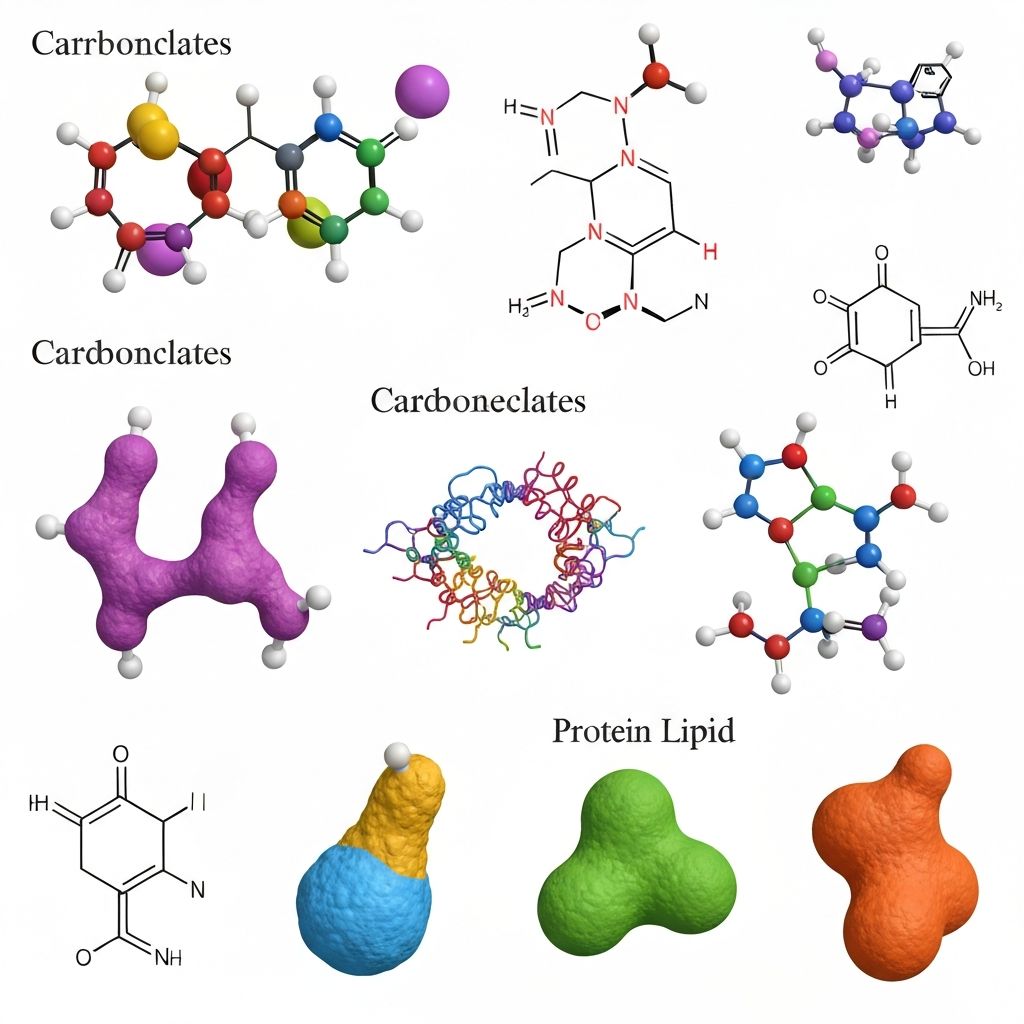
The Molecules of Life
Three key types power all living organisms
| Molecule Type | Elements | Examples | Main Functions |
|---|---|---|---|
| Carbohydrates | C, H, O | Glucose, starch, cellulose | Energy, storage, structure |
| Proteins | C, H, O, N, (S) | Enzymes, antibodies, collagen | Enzymes, structure, transport |
| Lipids | C, H, O (less O) | Fats, oils, waxes | Energy storage, insulation |
Carbohydrates are made of carbon (C), hydrogen (H), and oxygen (O) in a ratio of approximately 1:2:1. They come in three main types based on size:
Monosaccharides (Simple Sugars)
Single sugar units like glucose (C₆H₁₂O₆) and fructose. These are quickly absorbed and provide instant energy. Glucose is used in respiration to release energy for cells.
Disaccharides (Double Sugars)
Two sugar units joined together. Sucrose (table sugar) = glucose + fructose. Lactose (milk sugar) = glucose + galactose. Must be broken down before cells can use them.
Polysaccharides (Complex Carbohydrates)
Long chains of many glucose units. Three important types:
- Starch - energy storage in plants (potatoes, rice, bread)
- Glycogen - energy storage in animals (stored in liver and muscles)
- Cellulose - structural support in plant cell walls (indigestible fiber)
Proteins are made of carbon (C), hydrogen (H), oxygen (O), nitrogen (N), and sometimes sulfur (S). They are built from smaller units called amino acids, which are joined together in long chains called polypeptides. Ribosomes in cells assemble amino acids into proteins.
Key Functions of Proteins:
Speed up chemical reactions (e.g., amylase, pepsin)
Fight infections and disease
Build tissues (e.g., collagen in skin, keratin in hair)
Carry molecules (e.g., hemoglobin carries oxygen)
There are 20 different amino acids that can be arranged in countless combinations to create thousands of different proteins, each with a unique shape and function.
Lipids are made of carbon (C), hydrogen (H), and oxygen (O), but they have much less oxygen compared to carbohydrates. Lipids are built from fatty acids attached to a glycerol molecule.
Saturated Fats
All carbon atoms have single bonds - "saturated" with hydrogen. Usually solid at room temperature.
Examples: butter, lard, coconut oil
Unsaturated Fats
Have one or more double bonds between carbons. Usually liquid at room temperature (oils).
Examples: olive oil, fish oil, sunflower oil
Functions of Lipids:
- Energy storage: Store twice as much energy per gram as carbohydrates
- Insulation: Fat layer under skin keeps animals warm
- Protection: Cushion vital organs
- Cell membranes: Phospholipids form the structure of all cell membranes
- Signaling: Some hormones (like testosterone and estrogen) are lipids
Benedict's Test (Reducing Sugars)
Add Benedict's solution (blue) to food sample and heat. Color change: blue → green → yellow → orange → brick red indicates glucose present.
Iodine Test (Starch)
Add iodine solution (brown/orange) to food sample. Color change to blue-black indicates starch present.
Biuret Test (Proteins)
Add Biuret reagent (blue) to food sample. Color change to purple/lilac indicates protein present.
Ethanol Emulsion Test (Lipids)
Add ethanol to food sample, shake, then pour into water. A cloudy white emulsion indicates lipids present.
Chemical Elements
C, H, O (ratio 1:2:1)
Structure
Simple sugars (glucose) to complex chains (starch). Ring-shaped structures that can link together like a chain.
Examples
Glucose (monosaccharide), Sucrose (disaccharide), Starch and Cellulose (polysaccharides)
Functions
Quick energy (glucose), energy storage (starch in plants, glycogen in animals), structure (cellulose)
Glucose
Click to reveal definition
Question:
A student tests three foods: bread, boiled egg white, and butter. Predict the results for each food test.
Answer:
Bread (mainly carbohydrates):
- Iodine test: Blue-black (bread contains lots of starch)
- Benedict's test: Slight color change (small amounts of reducing sugars)
Egg white (pure protein):
- Biuret test: Strong purple (egg white is pure protein)
Butter (pure lipid):
- Ethanol test: Cloudy white emulsion (butter is pure fat)
Which test would you use to detect starch in a potato?