Metals and the Reactivity Series
Understand how metals are ranked by reactivity and predict displacement reactions
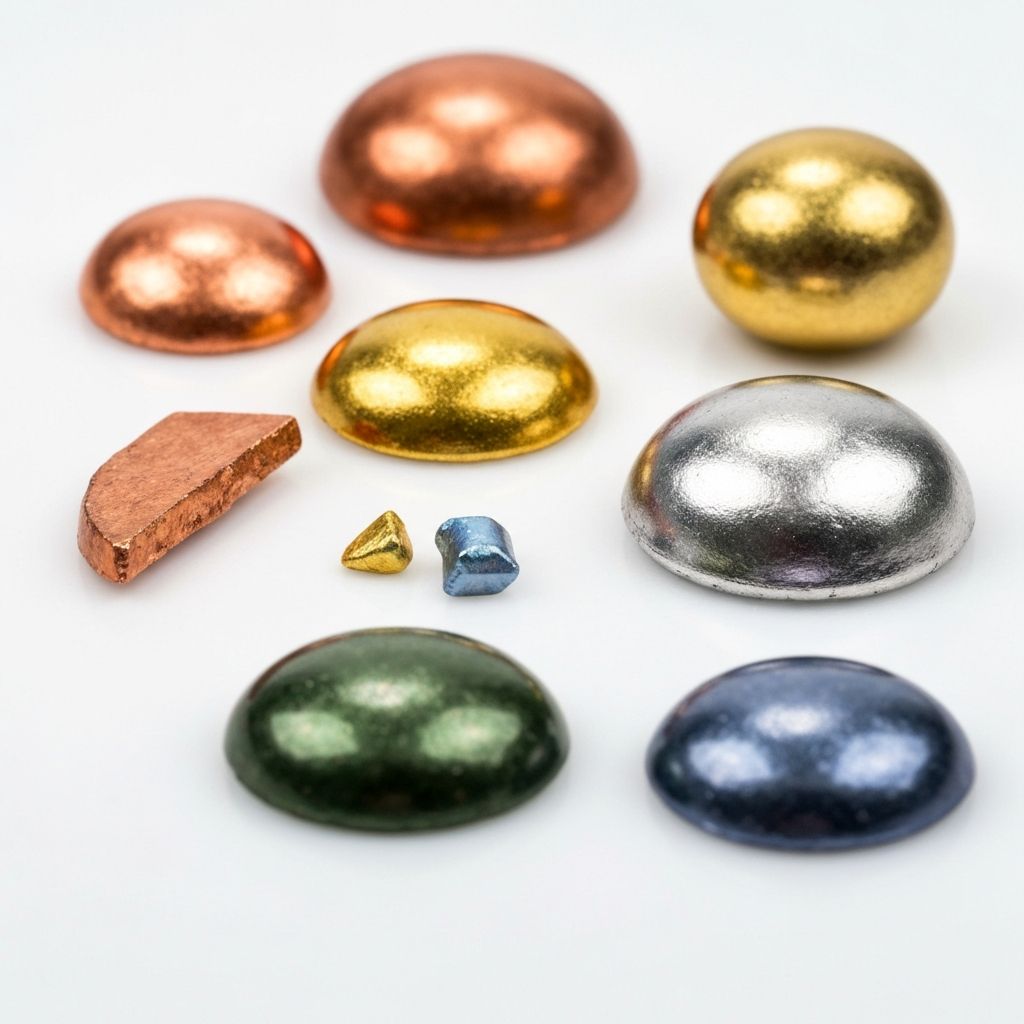
The Reactivity Series
Ranking metals from most to least reactive
The reactivity series ranks metals in order of how readily they react. From most to least reactive: potassium (K) > sodium (Na) > calcium (Ca) > magnesium (Mg) > aluminium (Al) > zinc (Zn) > iron (Fe) > copper (Cu) > silver (Ag) > gold (Au).
Reactivity depends on how easily a metal loses its outer electrons to form positive ions. Potassium loses its single outer electron very easily, making it extremely reactive. Gold holds onto its electrons tightly, making it very unreactive.
Hydrogen is placed between iron and copper in the series. Metals above hydrogen can displace it from acids; metals below hydrogen (Cu, Ag, Au) cannot react with dilute acids.
Memory Aid
Please Stop Calling Me A Zinky Iron Copper Silver Gold (K, Na, Ca, Mg, Al, Zn, Fe, Cu, Ag, Au)
With water: Potassium and sodium react violently (K catches fire). Calcium reacts vigorously with bubbling. Magnesium reacts slowly with cold water but vigorously with steam. Less reactive metals don't react with water.
With oxygen: All metals can react with oxygen when heated, forming metal oxides. Reactive metals burn brightly. The equation is: 4Na + O₂ → 2Na₂O. More reactive metals burn more easily.
With dilute acids: Metals above hydrogen in the series react to produce a salt and hydrogen gas: Zn + 2HCl → ZnCl₂ + H₂↑. More reactive metals react faster and more vigorously.
Displacement reactions: A more reactive metal can displace a less reactive metal from its compound: Fe + CuSO₄ → FeSO₄ + Cu. Iron is more reactive than copper, so it takes copper's place in the compound.
Reactivity Series (Most → Least reactive)
K
Potassium
Na
Sodium
Ca
Calcium
Mg
Magnesium
Al
Aluminium
Zn
Zinc
Fe
Iron
Cu
Copper
Ag
Silver
Au
Gold
Mnemonic: Please Stop Calling Me A Zinky Iron Copper Silver Gold
Displacement Reaction Predictor
Zinc Properties
With water: No reaction
With acid: Moderate
Can displace H from acid: Yes
Copper Properties
With water: No reaction
With acid: No reaction
Can displace H from acid: No
Question:
Predict what happens when a piece of zinc is placed in copper(II) sulfate solution. Write a balanced equation and explain your answer.
Answer:
Step 1: Check the reactivity series. Zinc is above copper, so zinc is more reactive.
Step 2: Since zinc is more reactive, it will displace copper from the copper sulfate solution.
Step 3: Write the balanced equation:
Zn + CuSO₄ → ZnSO₄ + Cu
Observations: The blue copper sulfate solution will gradually become colorless (zinc sulfate solution). A pink/brown coating of copper metal will appear on the zinc.
In terms of electrons: Zinc is oxidized (loses electrons: Zn → Zn²⁺ + 2e⁻). Copper ions are reduced (gain electrons: Cu²⁺ + 2e⁻ → Cu).
Which metal is more reactive: magnesium or copper?