Group 1 Elements – Alkali Metals
Explore the properties and reactions of lithium, sodium, potassium and other alkali metals
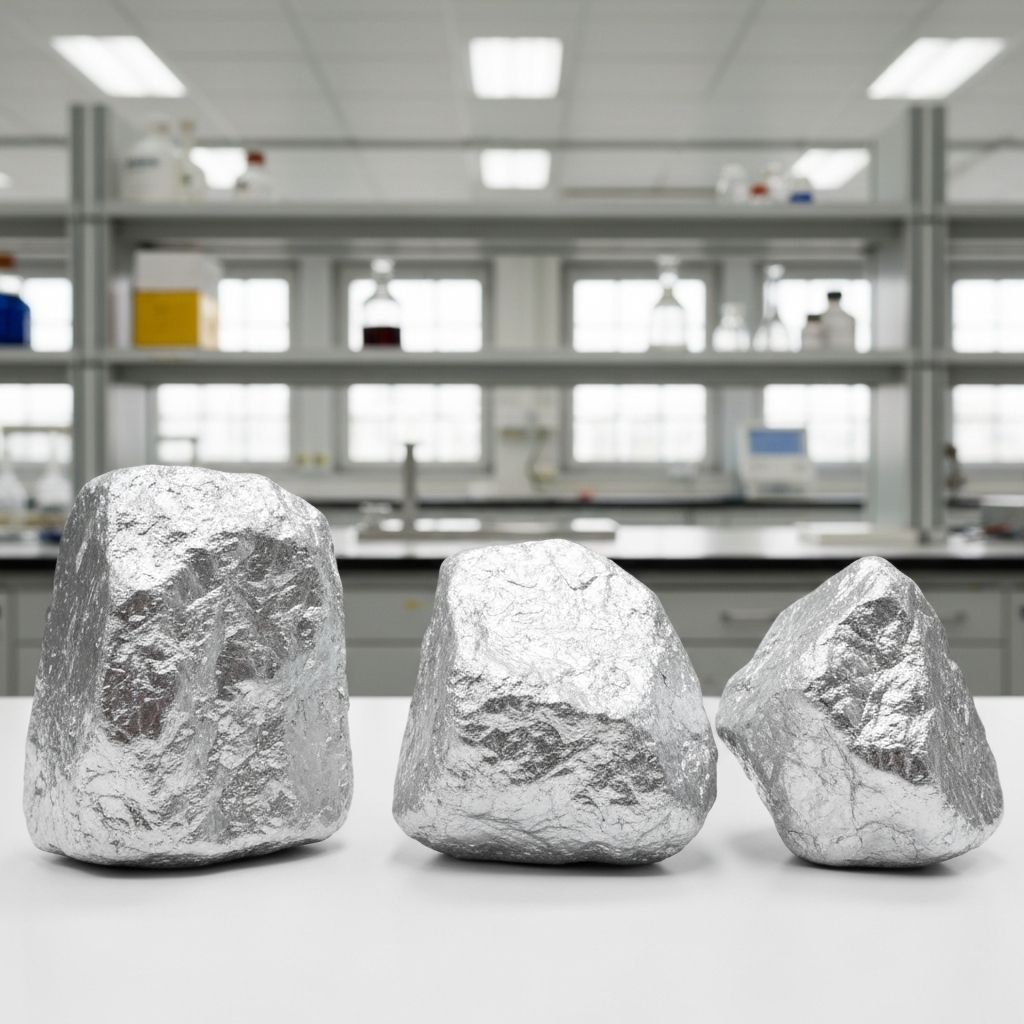
The Alkali Metals
Soft, reactive metals in Group 1
The Group 1 elements are called alkali metals: lithium (Li), sodium (Na), potassium (K), rubidium (Rb), caesium (Cs), and francium (Fr). They all have one electron in their outer shell, which they easily lose to form +1 ions. This makes them very reactive metals.
Alkali metals are soft (can be cut with a knife), have low density (Li, Na, K float on water), and have relatively low melting points that decrease down the group. They are stored under oil to prevent reaction with air and moisture.
Reactivity increases down the group because the outer electron is further from the nucleus and more easily lost. Lithium reacts gently with water, sodium reacts vigorously, and potassium reacts so vigorously it often ignites the hydrogen gas produced.
Key Exam Point
The trend in reactivity is opposite to Group 7 (halogens). Group 1 gets MORE reactive down the group because it's easier to LOSE the outer electron. Group 7 gets LESS reactive because it's harder to GAIN an electron.
With water: Alkali metals react vigorously with water to produce a metal hydroxide (an alkali, hence the name) and hydrogen gas. The general equation is: 2M + 2H₂O → 2MOH + H₂↑
With oxygen: Alkali metals burn in oxygen to form metal oxides. Sodium burns with a yellow flame: 4Na + O₂ → 2Na₂O. These oxides are basic and dissolve in water to form alkaline solutions.
With chlorine: Alkali metals react with chlorine to form white ionic salts called metal chlorides: 2Na + Cl₂ → 2NaCl. These reactions are vigorous and produce white smoke.
Flame tests can identify alkali metals: lithium gives a crimson red flame, sodium gives a golden yellow flame, and potassium gives a lilac flame. This is because each element emits light of a specific wavelength when heated.
Sodium
Atomic number: 11
Electron config
2,8,1
Melting point
98°C
Density
0.97 g/cm³
Reactivity
Medium
Flame test color
Golden yellow
Click to react with water
Question:
Explain why potassium is more reactive than sodium. Write a balanced equation for the reaction of potassium with water.
Answer:
Potassium is more reactive than sodium because potassium has more electron shells (2,8,8,1 vs 2,8,1). The outer electron in potassium is further from the nucleus and is shielded by more inner electrons.
This means the outer electron experiences less attraction from the positive nucleus, so it is more easily lost during reactions.
Balanced equation:
2K + 2H₂O → 2KOH + H₂
(potassium + water → potassium hydroxide + hydrogen)
Why does reactivity increase down Group 1?