Alkanes and Alkenes
Compare saturated and unsaturated hydrocarbons and their reactions
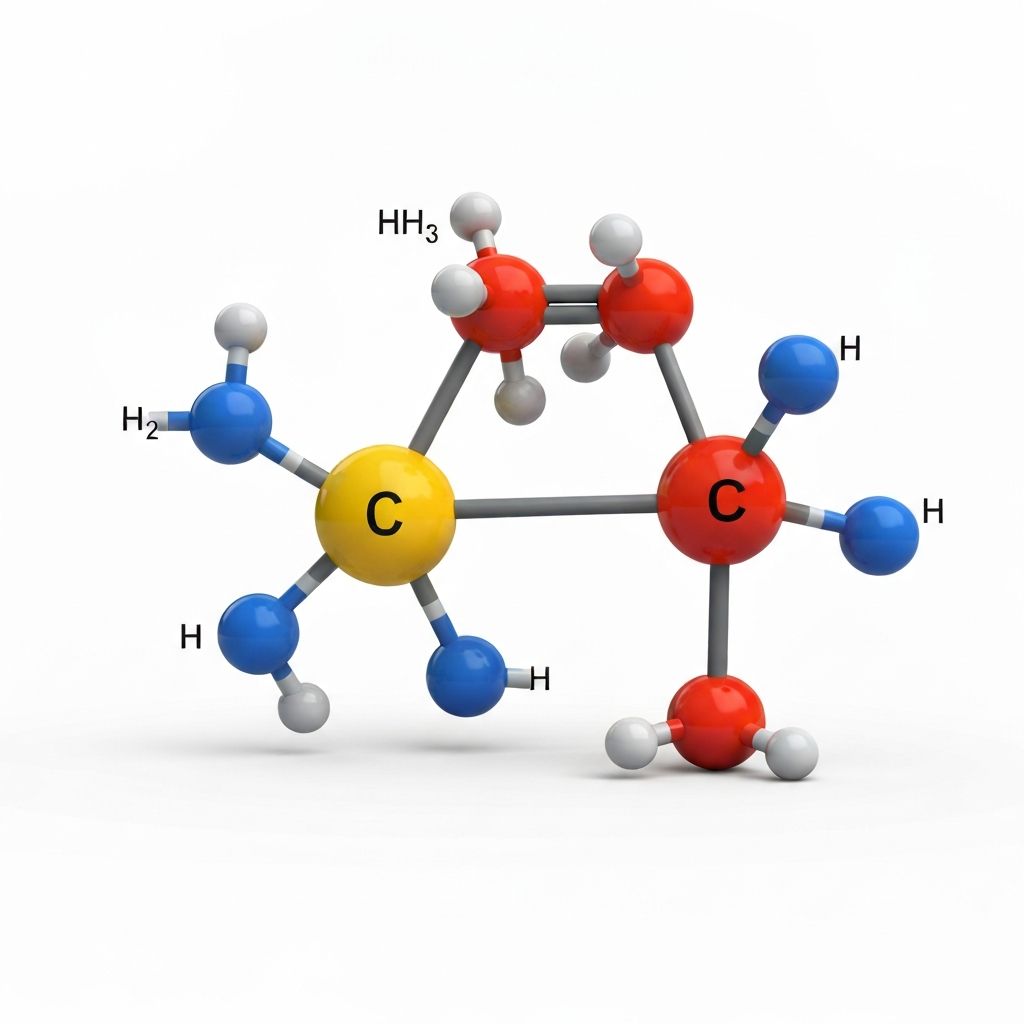
Saturated vs Unsaturated
Single bonds vs double bonds
Alkanes are saturated hydrocarbons containing only single C-C bonds. Their general formula is CₙH₂ₙ₊₂. The alkane series includes: methane (CH₄), ethane (C₂H₆), propane (C₃H₈), butane (C₄H₁₀), and pentane (C₅H₁₂).
Alkanes are relatively unreactive because their C-C and C-H bonds are strong and stable. They do not react with bromine water (it stays orange). However, they do burn in air (combustion) and can react with halogens under UV light (substitution reactions).
Key Exam Point
Alkanes are saturated because all carbon atoms have the maximum number of hydrogen atoms attached – they cannot add any more atoms without removing existing ones.
Alkenes are unsaturated hydrocarbons containing at least one C=C double bond. Their general formula is CₙH₂ₙ. The alkene series includes: ethene (C₂H₄), propene (C₃H₆), and butene (C₄H₈).
Alkenes are more reactive than alkanes because the double bond can open to allow addition reactions. In these reactions, atoms add across the C=C bond, converting it to a single bond.
Key reactions: Ethene + Br₂ → 1,2-dibromoethane (decolourises bromine water). Ethene + H₂ → Ethane (with Ni catalyst – hydrogenation). Ethene + H₂O → Ethanol (with acid catalyst – hydration).
Alkanes (Saturated)
- Formula: CₙH₂ₙ₊₂
- Bonds: Single C-C bonds only
- Reactivity: Relatively unreactive
- Examples: Methane, Ethane, Propane
- Bromine test: Stays orange
Alkenes (Unsaturated)
- Formula: CₙH₂ₙ
- Bonds: At least one C=C double bond
- Reactivity: More reactive (addition reactions)
- Examples: Ethene, Propene, Butene
- Bromine test: Decolourises (orange → colourless)
To test whether a hydrocarbon is saturated or unsaturated, add bromine water (orange) and shake. If the bromine water decolourises (turns colourless), the compound is an alkene (unsaturated). If it stays orange, the compound is an alkane (saturated).
This works because bromine atoms add across the C=C double bond in alkenes, using up the bromine and forming a colourless dibromoalkane. Alkanes have no double bonds to react with.
Question:
Propene (C₃H₆) reacts with bromine (Br₂). Write the equation and name the product. Explain how this reaction can be used to test for unsaturation.
Answer:
Equation:
C₃H₆ + Br₂ → C₃H₆Br₂Product name: 1,2-dibromopropane
Test explanation: When propene is shaken with orange bromine water, the C=C double bond opens and bromine atoms add across it. The bromine is used up, so the solution changes from orange to colourless. If the compound were an alkane (no double bond), the bromine water would stay orange because no reaction occurs.
What is the general formula for alkanes?