Burning Hydrocarbons – Complete and Incomplete Combustion
Understand the difference between complete and incomplete combustion and their environmental impacts
Combustion Reactions
Complete vs Incomplete
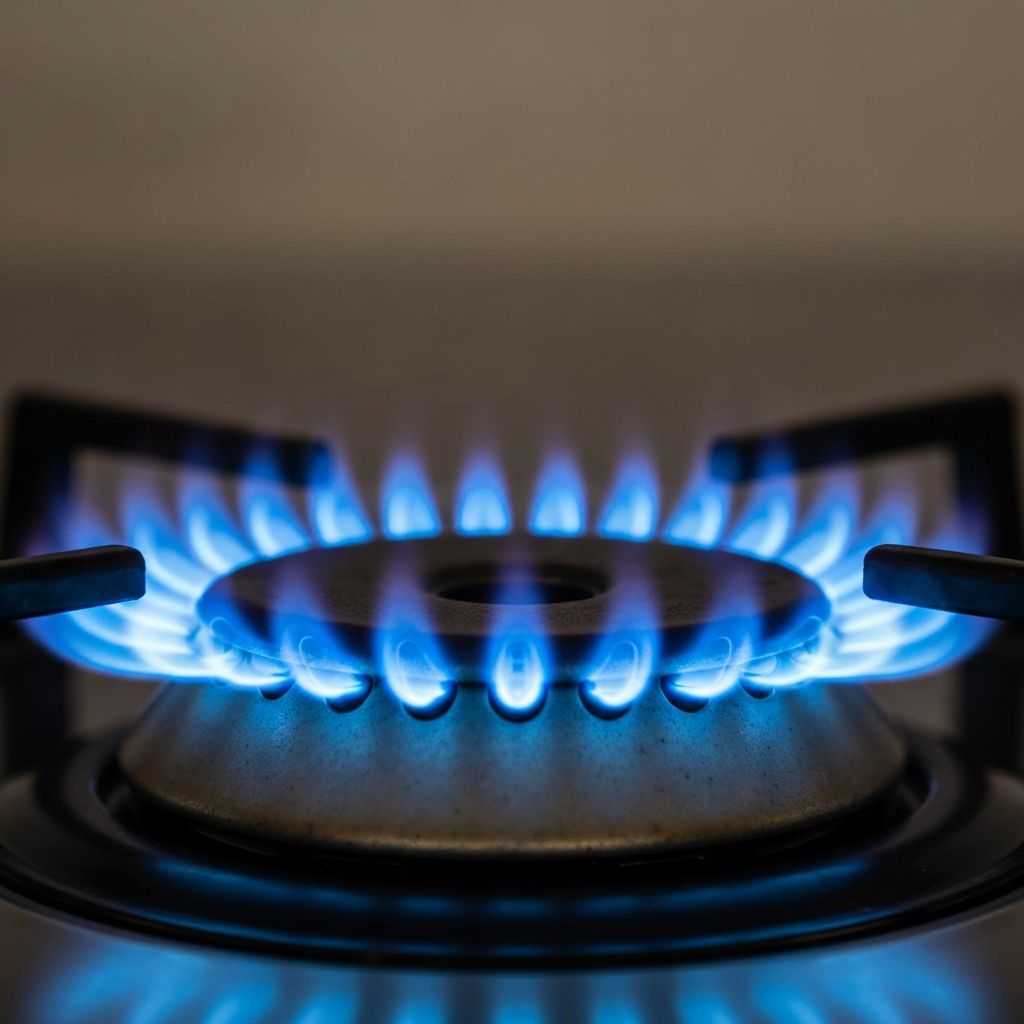
Complete combustion occurs when a hydrocarbon burns in excess oxygen. The only products are carbon dioxide (CO₂) and water (H₂O), plus energy in the form of heat and light. The flame is blue and produces no smoke or soot.
For example, methane burning completely: CH₄ + 2O₂ → CO₂ + 2H₂O. This is the ideal combustion reaction as it releases maximum energy and produces less harmful products (though CO₂ is still a greenhouse gas).
Key Exam Point
Complete combustion is identified by a blue flame and no soot. You can test for products: water condenses on cold glass, CO₂ turns limewater milky.
Incomplete combustion occurs when there is insufficient oxygen for complete burning. The products include carbon monoxide (CO), carbon/soot (C), and water. The flame is orange or yellow and produces visible black smoke.
For example: CH₄ + O₂ → CO + 2H₂O or CH₄ + O₂ → C + 2H₂O. This releases less energy than complete combustion and produces toxic carbon monoxide.
Carbon monoxide is extremely dangerous because it's colourless and odourless. It binds to haemoglobin in red blood cells more strongly than oxygen, preventing oxygen transport. This can cause headaches, dizziness, and death. Faulty boilers and car exhausts are common sources.
100% oxygen available
Reaction Equation
CH₄ + 2O₂ → CO₂ + 2H₂OProducts
Environmental impact: CO₂ is a greenhouse gas contributing to global warming. CO and soot cause air pollution and respiratory issues.
Carbon dioxide (CO₂) is a greenhouse gas. It traps heat in Earth's atmosphere, contributing to global warming and climate change. Burning fossil fuels releases large amounts of CO₂.
Carbon monoxide (CO) is a toxic air pollutant that affects human health. Soot (carbon particles) causes air pollution, reduces visibility, and can trigger respiratory problems like asthma. Both are produced by incomplete combustion in car engines and poorly maintained heating systems.
Question:
Write the balanced equation for complete combustion of propane (C₃H₈) and explain why incomplete combustion is dangerous.
Answer:
Complete combustion equation:
C₃H₈ + 5O₂ → 3CO₂ + 4H₂OBalancing: 3 carbons produce 3 CO₂; 8 hydrogens produce 4 H₂O; this requires 10 oxygen atoms (5 O₂ molecules).
Why incomplete combustion is dangerous: It produces carbon monoxide (CO), which is colourless and odourless. CO binds to haemoglobin in the blood more strongly than oxygen, reducing the blood's ability to carry oxygen. This can cause headaches, unconsciousness, and death.
What are the products of complete combustion?