Metallic Bonding and Properties of Metals
Understand how delocalised electrons create metallic bonds and explain metal properties
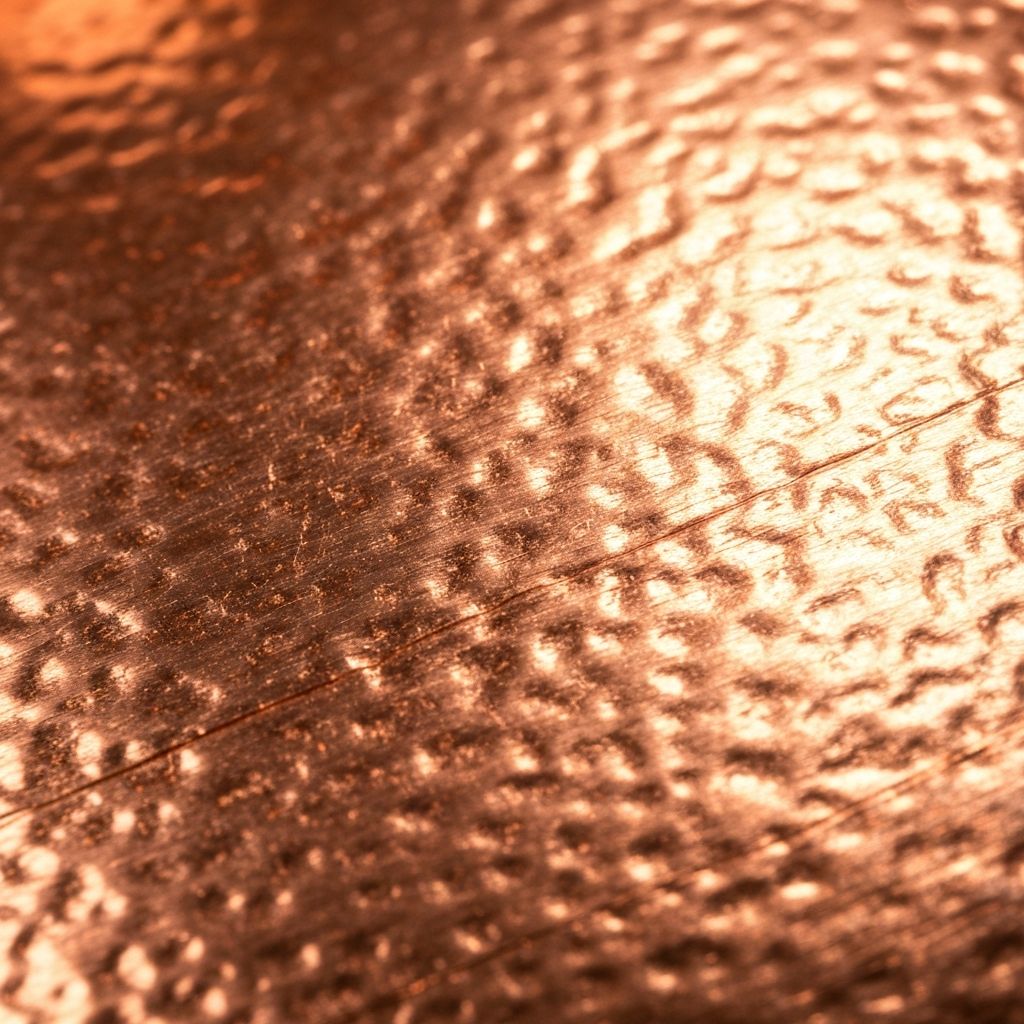
The Electron Sea
Delocalised Electrons and Metal Properties
Metallic bonding is the strong electrostatic attraction between positive metal ions (cations) and a "sea" of delocalised electrons. When metal atoms bond together, their outer electrons become detached and are free to move throughout the entire structure.
This is often called the electron sea model. The metal atoms lose their outer electrons and become positive ions arranged in a regular lattice. The electrons are no longer attached to any particular atom—they're delocalised—and move freely between the ions, acting like a "glue" that holds the structure together.
The strength of metallic bonding depends on the number of delocalised electrons and the charge on the metal ion. More electrons and higher charges mean stronger bonding and higher melting points.
The Electron Sea Model
In metallic bonding, metal atoms lose their outer electrons, becoming positive ions (cations). These electrons become delocalised—they're no longer attached to any particular atom and can move freely throughout the metal structure. This "sea" of electrons holds the positive ions together through electrostatic attraction.
Electrical conductivity: Metals are excellent conductors because the delocalised electrons can move freely through the structure, carrying electrical charge. When a voltage is applied, electrons flow from negative to positive.
Thermal conductivity: Metals conduct heat well because the delocalised electrons can transfer kinetic energy quickly through the structure. When one part is heated, electrons carry that energy throughout the metal.
Malleability and ductility: Metals can be hammered into sheets (malleable) and drawn into wires (ductile) because layers of ions can slide over each other without breaking the metallic bond. The delocalised electrons continue to hold the ions together in their new positions.
Lustre (shininess): Metals are shiny because the delocalised electrons can absorb light energy and re-emit it, giving metals their characteristic reflective appearance.
An alloy is a mixture of two or more elements, where at least one is a metal. Examples include steel (iron + carbon), bronze (copper + tin), and brass (copper + zinc).
Alloys are often harder and stronger than pure metals. This is because the different-sized atoms in an alloy disrupt the regular arrangement of the metal lattice, making it more difficult for layers to slide over each other. This is why steel is much harder than pure iron.
Alloys can be designed with specific properties for different uses—for example, stainless steel (iron + chromium + nickel) resists corrosion, making it ideal for cutlery and surgical instruments.
Metallic Bonding
Click to reveal definition
Question:
Using the electron sea model, explain why copper is a good electrical conductor and why it is malleable.
Solution:
Structure of copper: Copper atoms lose their outer electrons to form Cu⁺ or Cu²⁺ ions. These positive ions are arranged in a regular lattice structure. The outer electrons become delocalised and form a "sea" of electrons that can move freely throughout the metal.
Electrical conductivity: Copper conducts electricity well because the delocalised electrons are free to move through the structure. When a potential difference is applied across the copper, these electrons can flow from the negative terminal towards the positive terminal, carrying electrical charge. The more delocalised electrons available, the better the conduction.
Malleability: Copper is malleable because when a force is applied, the layers of copper ions can slide over each other into new positions. Importantly, the metallic bonding is not broken during this process—the delocalised electrons continue to surround and attract the positive ions in their new positions, holding the structure together. This allows copper to be hammered or rolled into thin sheets without shattering.
What are the two types of particles in a metallic structure?