Mains Electricity – AC Current and Voltage
Understanding alternating current, power calculations, and electrical safety
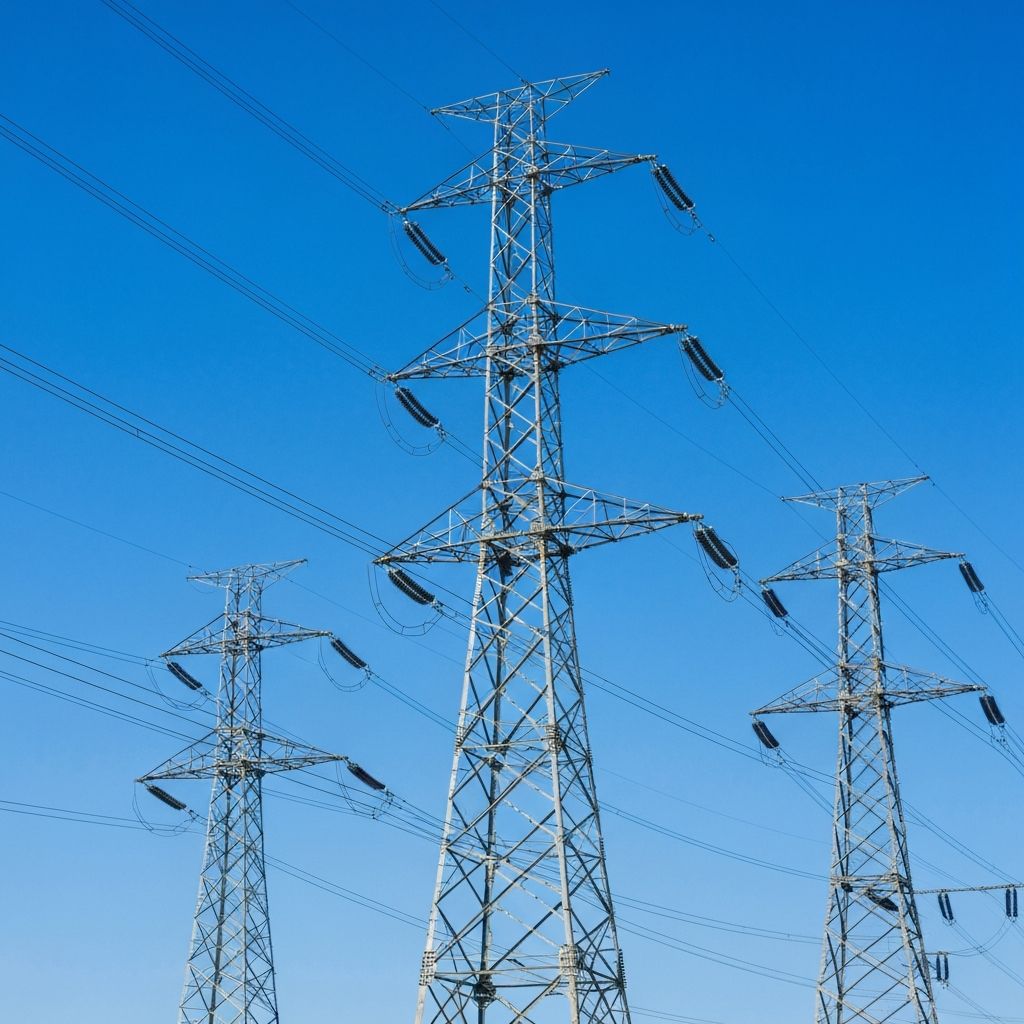
Mains Electricity
AC power for homes and businesses
Mains electricity uses alternating current (AC), where electrons periodically reverse direction. In the UK, mains electricity has a frequency of 50 Hz, meaning it completes 50 cycles every second.
Direct current (DC) flows in one constant direction. Batteries and solar cells produce DC. AC is preferred for mains electricity because it's easier to transform to different voltages for efficient long-distance transmission.
UK mains voltage is approximately 230 V RMS (root mean square). The peak voltage reaches about 325 V, but RMS gives the equivalent DC voltage for power calculations.
Power (P) measures the rate of energy transfer. For electrical circuits:
P = V × I
Power (W) = Voltage (V) × Current (A)
Energy (E) is power multiplied by time. For electricity billing, we use kilowatt-hours (kWh):
E = P × t
Energy (kWh) = Power (kW) × Time (hours)
One kilowatt-hour equals 3.6 × 10⁶ joules. To calculate cost, multiply kWh by the price per unit (typically £0.25-0.35 per kWh).
Fuses contain thin wire that melts if current exceeds the rated value, breaking the circuit. Common ratings are 3A, 5A, and 13A. Choose a fuse rated just above the normal operating current.
Circuit breakers automatically switch off when current is too high. Unlike fuses, they can be reset after tripping. Both devices protect against overheating and fire from excessive current.
AC (Alternating Current)
- • Direction alternates periodically
- • UK Mains: 230V, 50 Hz
- • Used for power transmission
- • Easy to transform voltage
DC (Direct Current)
- • Flows in one direction only
- • Batteries, solar cells
- • Used in electronics
- • Constant voltage level
Power (P = V × I)
690 W
0.69 kW
Energy (E = P × t)
1.38 kWh
4.97 MJ
Cost
£0.41
Fuse Selection
Fuse rating should be just above the normal operating current. Current = P ÷ V = 690 ÷ 230 = 3.0A
Alternating Current (AC)
Question:
A 3 kW electric oven runs for 2 hours. Calculate the energy used in kWh and the cost at £0.30 per kWh.
Answer:
Energy = Power × Time
E = 3 kW × 2 h = 6 kWh
Cost = Energy × Price per unit
Cost = 6 kWh × £0.30 = £1.80
What is the frequency of UK mains electricity?