Variation and Evolution
Understanding variation sources and how natural selection drives evolution
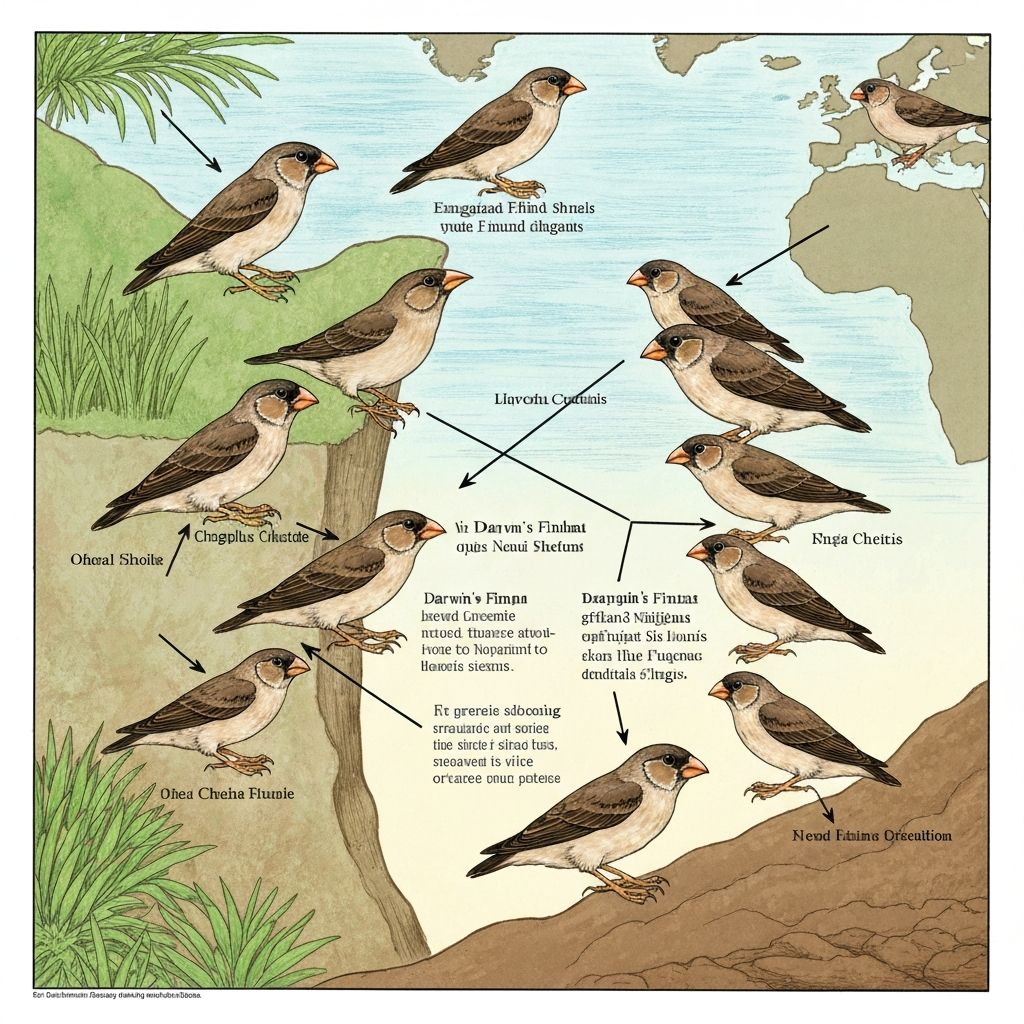
Evolution by Natural Selection
From variation to adaptation - how species change over time
Genetic Variation
Differences caused by genes (inherited from parents)
- • Mutations: random DNA changes creating new alleles
- • Meiosis: crossing over and independent assortment
- • Sexual reproduction: combination of DNA from two parents
Examples: eye color, blood type, attached earlobes
Environmental Variation
Differences caused by environment and lifestyle
- • Nutrition: diet affects growth and health
- • Climate: sun exposure affects skin color
- • Lifestyle: exercise builds muscle, language learned
Examples: weight, muscle mass, scars, spoken language
Continuous vs Discontinuous Variation
Continuous
Range of values, influenced by multiple genes and environment
E.g., height, weight, skin color
Discontinuous
Distinct categories, controlled by single genes
E.g., blood type, eye color
Natural selection is the mechanism of evolution proposed by Charles Darwin. Organisms with traits better suited to their environment are more likely to survive and reproduce, passing those advantageous traits to the next generation. Over many generations, this leads to evolution - gradual change in species characteristics.
Four Steps of Natural Selection
1. Variation
Within a population, individuals show variation in their characteristics due to genetic differences
2. Struggle for Survival
More offspring are produced than can survive. Organisms compete for limited resources (food, water, shelter, mates)
3. Survival of the Fittest
Individuals with advantageous adaptations are better suited to their environment, more likely to survive and reproduce
4. Change Over Time
Survivors pass beneficial alleles to offspring. Over many generations, advantageous traits become more common. The population evolves.
Adaptations are inherited characteristics that make an organism well-suited to its environment and increase survival chances.
Structural (Physical) Adaptations
Body features and structures
- • Thick fur: keeps animals warm in cold climates
- • Camouflage: helps prey hide from predators
- • Long neck (giraffe): reaches high leaves
- • Sharp claws: catching prey
Behavioral Adaptations
Actions and behaviors
- • Migration: birds fly to warmer climates in winter
- • Hibernation: conserving energy during cold months
- • Nocturnal behavior: avoiding daytime heat
- • Mating displays: attracting partners
Initial Population - Variation Exists
Population of beetles with different colors due to genetic variation.
Yellow
Count: 7
Green
Count: 3
What's happening: 10 beetles total: 7 yellow, 3 green. Variation due to different alleles.
Antibiotic resistance in bacteria is a real-world example of natural selection happening rapidly. When antibiotics are used, bacteria with resistance mutations survive while others die. These resistant bacteria reproduce, creating a population that antibiotics can no longer kill.
How Resistance Evolves
Step 1: Random Mutation
A few bacteria have random mutations giving antibiotic resistance
Step 2: Antibiotic Treatment
Most bacteria die, but resistant ones survive
Step 3: Reproduction
Resistant bacteria reproduce rapidly without competition
Step 4: Resistant Population
The population is now mostly resistant - antibiotic no longer works
Why This Matters
Overuse of antibiotics accelerates resistance evolution. This is why doctors only prescribe antibiotics when necessary and why completing the full course is important.
1. Fossil Record
Fossils show how organisms have changed over millions of years. Older rocks contain simpler fossils; newer rocks show more complex organisms. Transitional fossils show intermediate forms between species (e.g., Archaeopteryx - between dinosaurs and birds).
2. Antibiotic Resistance in Bacteria
Bacteria evolve resistance to antibiotics within decades - evolution we can observe. Bacteria with resistance mutations survive treatment and pass resistance genes to offspring, creating resistant populations.
3. Comparative Anatomy (Homologous Structures)
Similar bone structures in different species suggest common ancestry. Human arm, whale flipper, bat wing, and horse leg have the same basic bone pattern despite different functions - evidence they evolved from a common ancestor.
4. DNA and Molecular Evidence
All organisms use DNA with the same genetic code. Closely related species have more similar DNA sequences. Humans share 98% of DNA with chimpanzees, showing recent common ancestry. The more DNA similarity, the closer the evolutionary relationship.
Question: Explain how giraffes evolved long necks using Darwin's theory of natural selection.
Step 1: Variation
In the ancestral giraffe population, there was natural variation in neck length due to genetic differences (mutations). Some giraffes had slightly longer necks, others shorter.
Step 2: Struggle for Survival
During droughts or competition, food (leaves) became scarce. Low-growing vegetation was eaten quickly. Giraffes competed for limited resources.
Step 3: Survival of the Fittest
Giraffes with longer necks could reach higher leaves that others could not access. They had a survival advantage - better fed, healthier, more likely to survive and reproduce.
Step 4: Change Over Time
Long-necked giraffes passed their genes for longer necks to offspring. Over many generations, the average neck length increased. Short-necked giraffes died out due to competition.
Summary Answer:
Giraffes evolved long necks through natural selection. Variation existed in neck length. During food competition, longer-necked individuals had a survival advantage. They reproduced more successfully, passing long-neck alleles to offspring. Over many generations, the population evolved to have longer necks.
1. What is natural selection?
2. Which is NOT a source of genetic variation?
3. In natural selection, what does 'survival of the fittest' mean?
4. How does antibiotic resistance in bacteria demonstrate evolution?
5. What is a mutation?
6. Which provides evidence for evolution?
7. In the peppered moth example, why did dark moths become more common during industrial pollution?
8. What is an adaptation?