Energy Resources – Renewable and Non-Renewable
Understanding where our energy comes from and its environmental impact
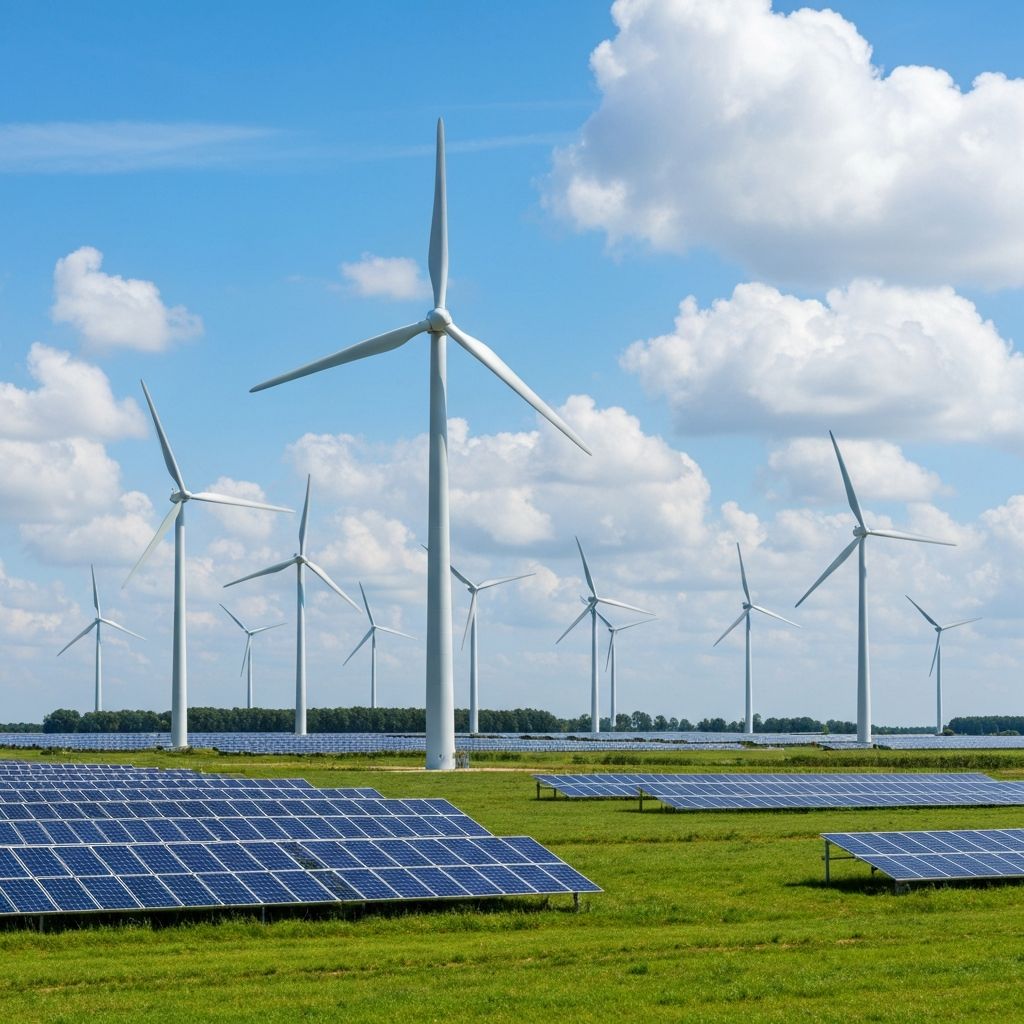
Renewable vs Non-Renewable Energy
Comparing energy sources for electricity generation
| Renewable | Non-Renewable | |
|---|---|---|
| Supply | Will not run out | Will eventually run out |
| CO₂ Emissions | None or very low | High (except nuclear) |
| Reliability | Often weather-dependent | Very reliable (on-demand) |
| Power Output | Generally lower | High output |
| Examples | Solar, wind, hydro, tidal, geothermal, biomass | Coal, oil, natural gas, nuclear |
Understanding Energy Resources
Modern society relies on energy resources to generate electricity, heat buildings, and power transport. These resources are classified as either renewable (will not run out) or non-renewable (will eventually be exhausted).
Renewable Energy Sources
Renewable resources are replenished as fast as (or faster than) they are used. They include:
- Solar energy – photovoltaic cells convert light directly into electricity; solar heating panels absorb thermal radiation to heat water
- Wind energy – turbines convert kinetic energy of moving air into electrical energy
- Hydroelectric power (HEP) – water at height has gravitational potential energy; as it flows down, it turns turbines
- Wave and tidal power – ocean motion drives turbines; tides are caused by the moon's gravitational pull
- Geothermal energy – hot rocks underground heat water to produce steam for turbines
- Biomass – organic matter burned or fermented; considered carbon neutral as plants absorb CO₂ while growing
Non-Renewable Energy Sources
Non-renewable resources are being used faster than they can be replaced:
- Fossil fuels (coal, oil, gas) – formed from dead organisms over millions of years; release CO₂ and cause climate change
- Nuclear fuel (uranium-235) – fission releases energy from atomic nuclei; no CO₂ but produces radioactive waste
Energy Transfers in Power Stations
In a fossil fuel power station: Chemical → Thermal → Kinetic → Electrical
In a nuclear power station: Nuclear → Thermal → Kinetic → Electrical
In a wind turbine: Kinetic → Electrical
In a solar cell: Light → Electrical
Energy Transfer
Solar panels convert light energy directly into electrical energy using photovoltaic cells.
Advantages
- + No fuel costs
- + No CO₂ emissions
- + Low maintenance
- + Infinite supply
Disadvantages
- - Weather dependent
- - Expensive setup
- - Only works in daylight
- - Large area needed
Compare wind power and coal power for generating electricity.
Wind Power:
- Energy transfer: Kinetic → Electrical
- Advantages: No fuel costs, no CO₂ emissions, infinite supply
- Disadvantages: Unreliable (depends on wind), visual/noise pollution
- Environmental impact: Low (but can affect birds)
Coal Power:
- Energy transfer: Chemical → Thermal → Kinetic → Electrical
- Advantages: Reliable 24/7, high power output, established infrastructure
- Disadvantages: Produces most CO₂, causes acid rain, will run out
- Environmental impact: Very high (greenhouse gases, mining damage)
Conclusion: Wind is better for the environment but less reliable. A mix of sources provides security while reducing emissions.
Renewable energy
Click card to flip • 1 of 16
Which of these is a renewable energy source?