Crop Production and Selective Breeding
How humans improve crop yields and breed organisms for desired characteristics
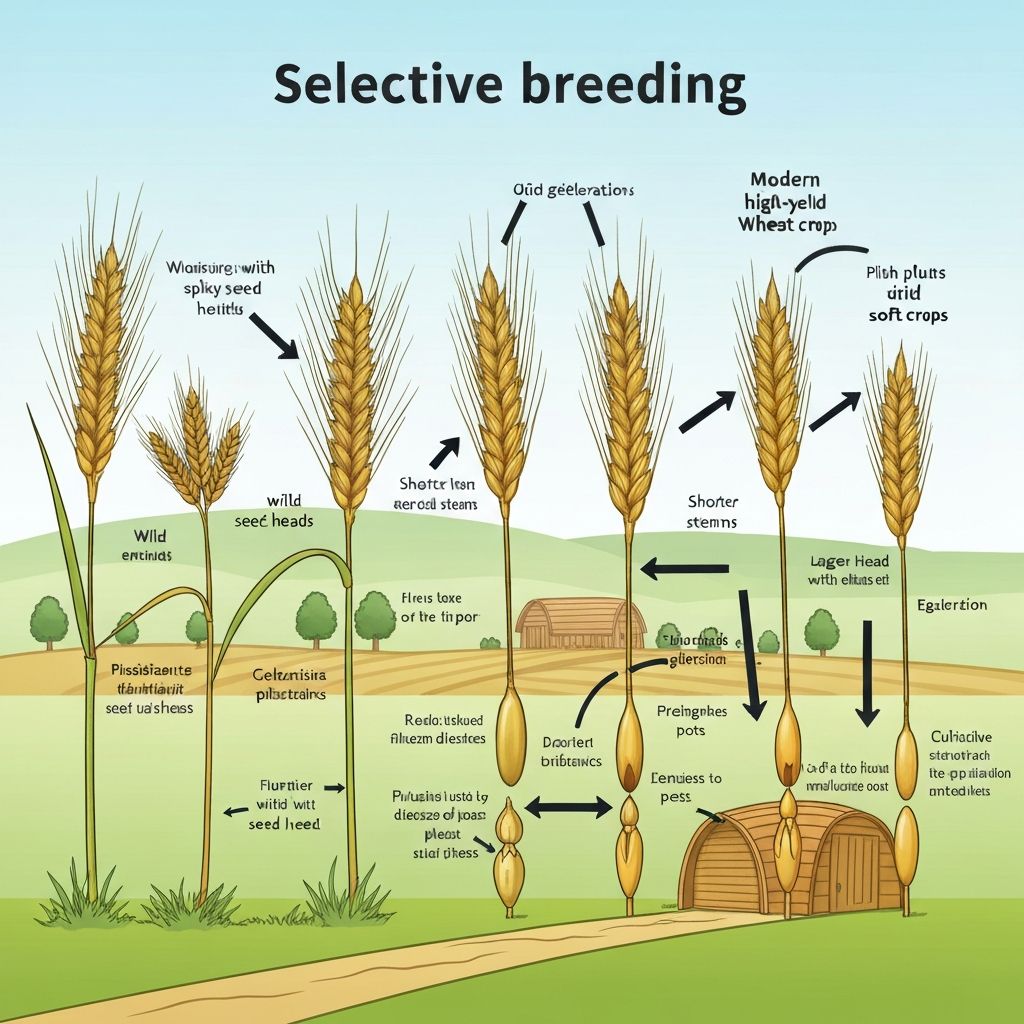
Crop production involves growing plants for food, including cereals (wheat, rice, maize), vegetables, and fruits. Humans have improved crop yields through selective breeding - choosing organisms with desirable characteristics and breeding them over many generations to increase the frequency of beneficial alleles in the population.
Select organisms with desired traits
Cross the best individuals together
Choose best offspring from the cross
Continue for many generations
Selective breeding works by increasing the allele frequency for desired characteristics in a population. For example, if you want wheat plants that produce more grain, you select the plants with the highest yield and breed them. Over many generations, the genes for high yield become more common in the population.
Examples of Selective Breeding
- Wheat: Bred for higher grain yield and disease resistance
- Cattle: Bred for more meat production or higher milk yield
- Dogs: All dog breeds came from selective breeding of wolves over thousands of years
Generation 1 of 5
Select parents with desired traits and breed them
Offspring Results (Generation 1)
Advantages
- ✓Increased yield: More food per plant or animal
- ✓Disease resistance: Crops less susceptible to pests and diseases
- ✓Better quality: Improved flavor, texture, or nutritional value
- ✓Adaptation: Can breed for specific environmental conditions
Disadvantages
- ✗Reduced genetic diversity: Less variation in gene pool
- ✗Inbreeding depression: Harmful recessive alleles become more common
- ✗Time-consuming: Takes many generations to see results
- ✗Vulnerability: Entire crop susceptible to same disease
Monoculture is growing a single crop species over a large area. While efficient for harvesting, it depletes soil nutrients, increases pest vulnerability, and requires heavy pesticide use.
Crop rotation alternates different crops in the same field across seasons. This maintains soil fertility, reduces pest buildup, and breaks disease cycles naturally.
Year 1 of 5
Compare how the two farming methods perform over time