Electromagnetic Waves and the Spectrum
Understanding the full range of electromagnetic radiation
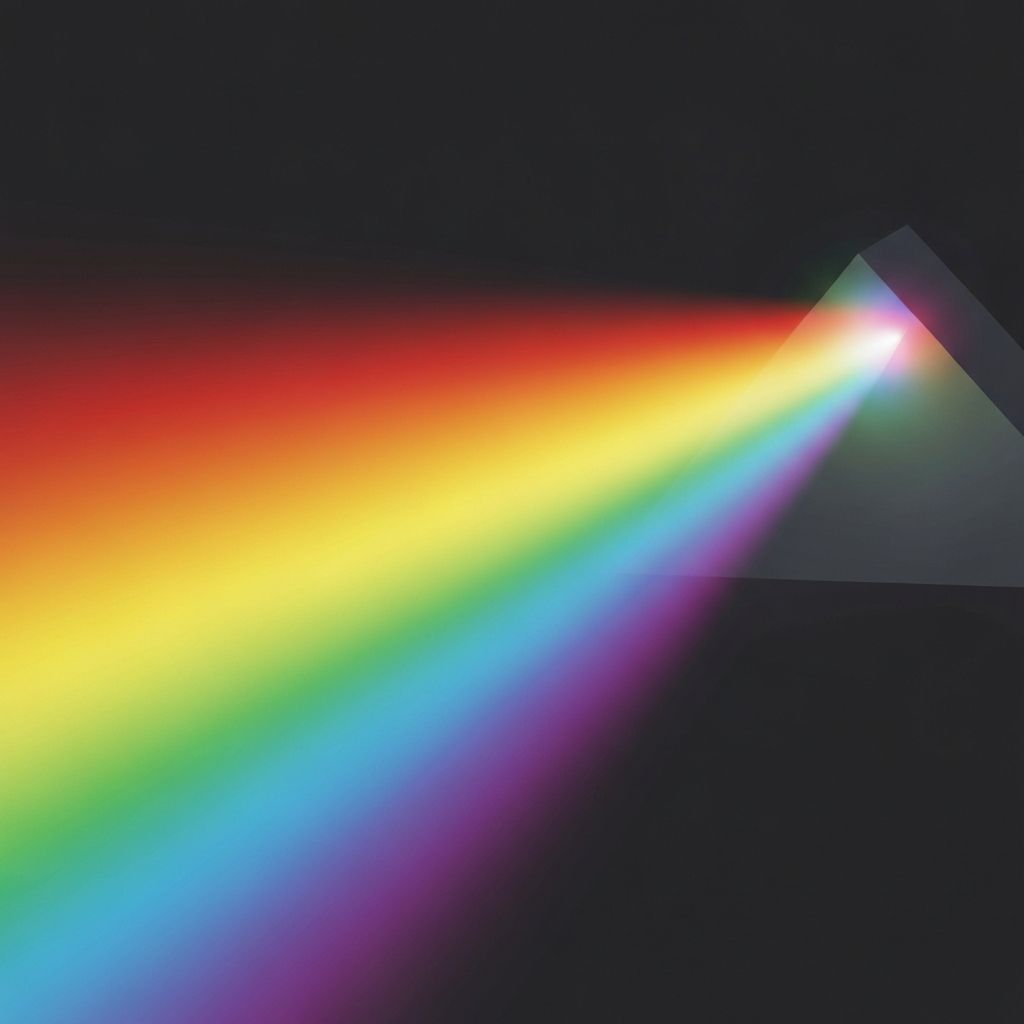
The EM Spectrum
From radio waves to gamma rays
Electromagnetic (EM) waves are transverse waves that transfer energy. Unlike sound, they don't need a medium to travel through—they can pass through the vacuum of space. This is why we can see light from distant stars.
All EM waves travel at the same speed in a vacuum: 3 × 10⁸ m/s (the speed of light). They obey the wave equation: v = fλ.
The EM spectrum is arranged by wavelength (and frequency). From longest wavelengthto shortest:
Radio → Microwave → Infrared → Visible → Ultraviolet → X-ray → Gamma
Visible light is only a tiny portion of the spectrum—the part our eyes can detect. It ranges from red (longest wavelength, ~700 nm) to violet (shortest, ~400 nm).
Higher frequency waves carry more energy. UV, X-rays, and gamma rays are called ionizing radiation because they have enough energy to remove electrons from atoms, which can damage living cells and DNA.
- Radio waves: Broadcasting TV and radio, WiFi, Bluetooth
- Microwaves: Cooking food, mobile phones, satellite communications
- Infrared: Remote controls, thermal imaging, heating
- Visible light: Vision, photography, fiber optic communication
- Ultraviolet: Sterilization, detecting counterfeit notes, tanning
- X-rays: Medical imaging (seeing bones), airport security
- Gamma rays: Cancer treatment (radiotherapy), sterilizing equipment
Non-ionizing radiation (radio, microwave, infrared, visible) is generally safer, though microwaves and infrared can cause burns by heating tissues.
Ionizing radiation (UV, X-rays, gamma) is more dangerous:
- UV: Causes sunburn, skin cancer, cataracts
- X-rays: Damage cells, increase cancer risk (limited exposure in hospitals)
- Gamma: Most penetrating, can kill cells, cause cancer, used carefully in medicine
Radio Waves
Microwaves
Infrared
Visible Light
Ultraviolet
X-rays
Gamma Rays
All EM waves travel at the speed of light: 3 × 10⁸ m/s in a vacuum
Electromagnetic Wave
Question:
A radio station broadcasts at a frequency of 100 MHz (100 × 10⁶ Hz). Calculate the wavelength of these radio waves. (Speed of EM waves = 3 × 10⁸ m/s)
Answer:
Using v = fλ, rearranged to λ = v/f
λ = (3 × 10⁸) ÷ (100 × 10⁶)
λ = (3 × 10⁸) ÷ (1 × 10⁸)
λ = 3 m
What is the speed of all electromagnetic waves in a vacuum?